(published
by the Halifax Herald, March 29, 2006)
Seal
hunt ecologically irresponsible 
Nobody
said that the seal hunt was cruel, and nobody complained that Canada kills whitecoat
pups, at the Department of Fisheries and Oceans’ latest public consultation
on seal hunting.
At
the seal forum last November,
only one criticism was raised against the seal hunt. It was argued that the seal
hunt plan is unacceptable because it is not "ecosystem-based," and DFO
was reminded of its legal obligation under the Oceans Act to use ecosystem-based
conservation plans.
A
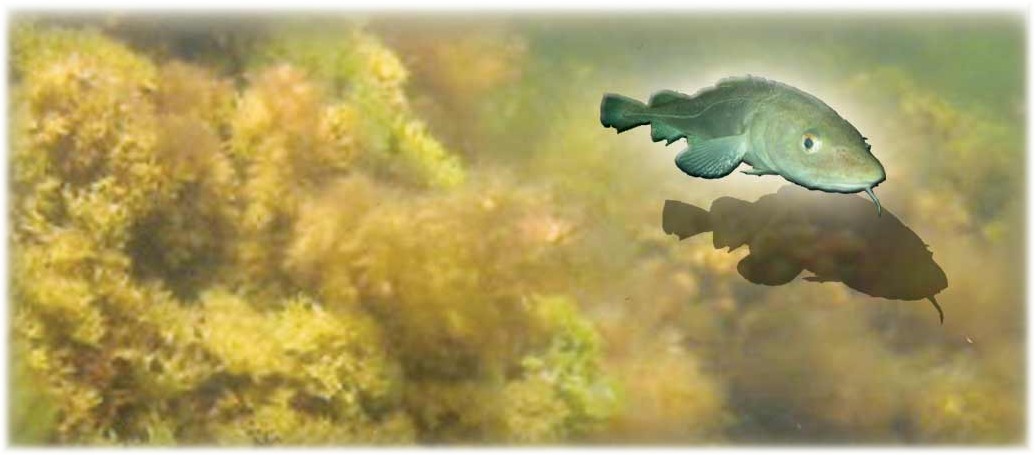
stable, healthy ocean ecosystem needs large natural predators, and all other big
predators in Atlantic Canada, besides seals, have recently been eliminated. Scientists
accept these facts: This is in reference to the huge numbers of large predatory
fish that long competed with seals to eat small fish.
Today,
essentially all big fish are gone, and rising seal numbers have not nearly made
up for the loss. To maintain a healthy natural predator presence in the ocean,
therefore, none of the relatively few surviving fish predators should now be killed,
and that includes seals.
Natural
predators play key roles; and entire ecosystems, including the prey species, do
better when predators survive too. Eliminating large predators degrades ecosystems,
and this occurs everywhere from forests to grasslands to oceans.
A
mass harvest of seals today carries a greater ecological risk to the ocean than
it did when great hordes of large predatory fish shared the waters (cod, shark,
halibut, etc.) and shared the seals’ ecological role.
The
truth is that today’s ocean scenario, both the potentialities and the risks,
is not remotely like it was in earlier times.
Now
the web of sea life appears strangely unstable, teetering. If we take the seals,
we remove the last natural predators from a once robust web. What collapses then?
The
platitude that seal hunting is a time-honoured "tradition" becomes irrelevant.
Although seals
and ice floes may look exactly as they did in past centuries, what lies beneath
the surface has changed dramatically for the worse.
The
food supply for fish is failing, and the oxygen
content of seawater is falling, as the ecosystem becomes increasingly poor
and degraded. Under this scenario, insisting on targeting the last surviving natural
fish predator courts ecological disaster.
The
worst of it is that there are DFO scientists who are aware of this problem, but
who are not permitted to speak openly about it.
These
scientists were not invited to "advise" the "seal managers."
The managers wanted "science advice" only on the size of the seal herds,
refusing to consider information about the state of the ecosystem, including the
now serious shortage of fish predators.
When
it was explained at the seal forum that DFO scientists have published much relevant
ecosystem science, including a rationale for protecting fish predators, and that
this information should logically translate into advice that managers not approve
another seal hunt – the reply was silence.
But
outside the forum, a DFO official remarked that nobody reads those ecosystem papers
anyhow.
DFO
managers were formally asked to consider science advice from their own scientists,
regarding how modern ecosystem objectives should be used in planning the seal
hunt. But they refused, claiming this was unnecessary.
Amid
hyperbole about "science on the cutting edge" and "international
leadership," DFO boasts of using a new "ecosystem approach" to
ocean conservation.
But
they are not, because the new seal hunt plan is, like all previous ones, based
only on an outmoded "single-species approach."
This
method was long used by fishery managers: Numbers of fish or seals were estimated
and then some fraction was declared as the quota for a "sustainable fishery."
However, this simple strategy has failed spectacularly – think: cod crash.
Science today knows
a better way, but DFO refuses to admit it.
DFO
was likely pleased to see animal rights groups again denouncing this spring’s
harp seal hunt as brutal. That was their cue to launch the standard rebuttal:
"The seal hunt is humane! We have scientific proof of that! And we don’t
kill whitecoat pups!"
OK,
sure DFO, we’ve heard all that before. Now please explain why you refuse
to meet your obligation to safeguard the future of Canada’s marine life by
using modern scientific methods, by meeting your legal obligation to Canadians
to use an ecosystem-based approach to conservation.
Why
do you refuse to listen even to your own scientists?
Why, after the
disastrous losses of marine life over the last two decades, does Canada still
have government science muzzled by the fishing industry?
Debbie
MacKenzie is a director of the Grey Seal Conservation
Society.